News
Rising costs in the hotel industry: sustainability also offers solutions for saving money
16.02.2026
Longer product lifespans, lower follow-up costs, and circular economy are increasingly becoming the focus of strategic investments for hospitality operators.
With increasing cost pressure in the hotel industry, sustainability is taking on a new economic dimension. More and more renowned hoteliers are questioning short-term savings in purchasing and consistently basing their investment decisions on long-term profitability. Across all industries, it is not the lowest purchase price that determines success, but rather an awareness of the follow-up costs and the consequences of one's own actions. It is precisely where supposedly inexpensive solutions are tempting that long-term costs are often underestimated. Essentially, it is about the conscious use of resources, their origin, and their actual service life. In the hospitality industry, calculations are often made in short cycles. Mattresses, for example, are disposed of after an average of six to seven years and sent to waste incineration. This not only burdens the environment and resources but also causes avoidable costs.
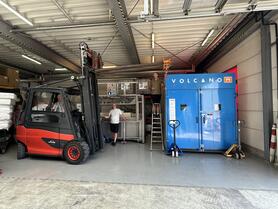
High-quality mattresses in the hotel industry have a service life of 15 to 20 years, depending on occupancy and care. Those who realistically factor these factors into their pricing are not investing more expensively, but more economically. Against this backdrop, international industry giants such as Numa, a rapidly growing provider of fully digitalized serviced apartments with over 7,000 units in around 50 locations in more than 15 European countries, are putting their trust in Swissfeel. With a recently extended framework agreement, the company secures analog added value within a highly digitized business model: maximum sleeping comfort for guests and, at the same time, a significantly extended service life for the equipment. This is made possible by a unique selling point of the Swiss manufacturer: The mattresses are fully washable. There is no need for early disposal for hygiene reasons, and the product's entire service life is utilized. With the SWISSFEEL-2-CYCLE system, the Swiss manufacturer is pursuing a dual cycle approach and consistently transferring the mattress into the circular economy. A dedicated logistics service, a patented washing solution, and free return at the end of the product's useful life ensure these cycles.
"For us, sustainability is not an ideal, but a business decision. Taking into account the entire life cycle of a product saves costs, reduces resource consumption, and at the same time creates measurable added value for operators and guests," says Swissfeel owner Philipp Hangartner. This shows that sustainability is not a cost factor, but rather a cost brake, while at the same time helping to secure a future worth living. This is an idea that Johann "Hannß" Carl von Carlowitz, the creator of the concept of forest sustainability, formulated over 300 years ago: "That there should be continuous, consistent, and sustainable use, because it is an indispensable thing, without which the land cannot remain in its essence."

DAS KÖNNTE DIR AUCH GEFALLEN
 September 03, 2025
Zirkuläre Hotelmatratzen: Bundesrat (DE) ebnet den Weg für echte Kreislaufwirtschaft
Kostenfreie Rücknahme, doppelter Kreislauf und Ausbau der Wasch- und Logistikanlagen – Swissfeel rüstet auf und positioniert sich als Vorreiter nachhaltiger Bettenhygiene für die Hotellerie. July 10, 2026
The Circular Pioneer: Philipp Hangartner’s Washable SWISSFEEL Blueprint for Hospitality Asset Economics and Perpetual Lifecycle Hygiene
Philipp Hangartner, owner of SWISSFEEL, combines sleep hygiene, cost efficiency and sustainability through fully washable hotel mattresses. Their long lifespan, circular design and digital mattress management help significantly reduce allergens, costs, waste and CO₂ emissions. October 06, 2025
Handelsblatt präsentiert zirkuläre Hotelmatratze: doppelter Kreislauf als Modell für nachhaltige Hotellerie
Der Hersteller Swissfeel bietet mit seinem SWISSFEEL-2-CYCLE-System eine Lösung, die Hygiene, Ökologie und Wirtschaftlichkeit vereint – Gesetzgeber, Branche und Umwelt profitieren zugleich.